Deep cleaning can feel like trying to empty a pool with a coffee mug. There’s always one more shelf, one more stain, one more room pulling your eye.
The good news is that deep cleaning doesn’t have to mean scrubbing your house from sunrise to bedtime. A regular clean handles the obvious mess. A deep clean goes after the grime you don’t hit every week, like baseboards, fan blades, grout, and the space behind appliances.
If you use a simple plan, the right tools, and a smart room order, the job gets faster and far less draining.
Set yourself up before you start cleaning
Efficiency starts before the first spray bottle comes out. Pick one room at a time, not the whole house at once. Then decide your order and stick to it. That alone cuts down on repeat work.
Use the top-to-bottom rule in every room. Dust and crumbs fall, so high spots always come first. Also, set a timer for 20-minute zones. Short bursts keep your pace up and stop that heavy, “I’ve been cleaning forever” feeling.
Declutter first so you can clean faster
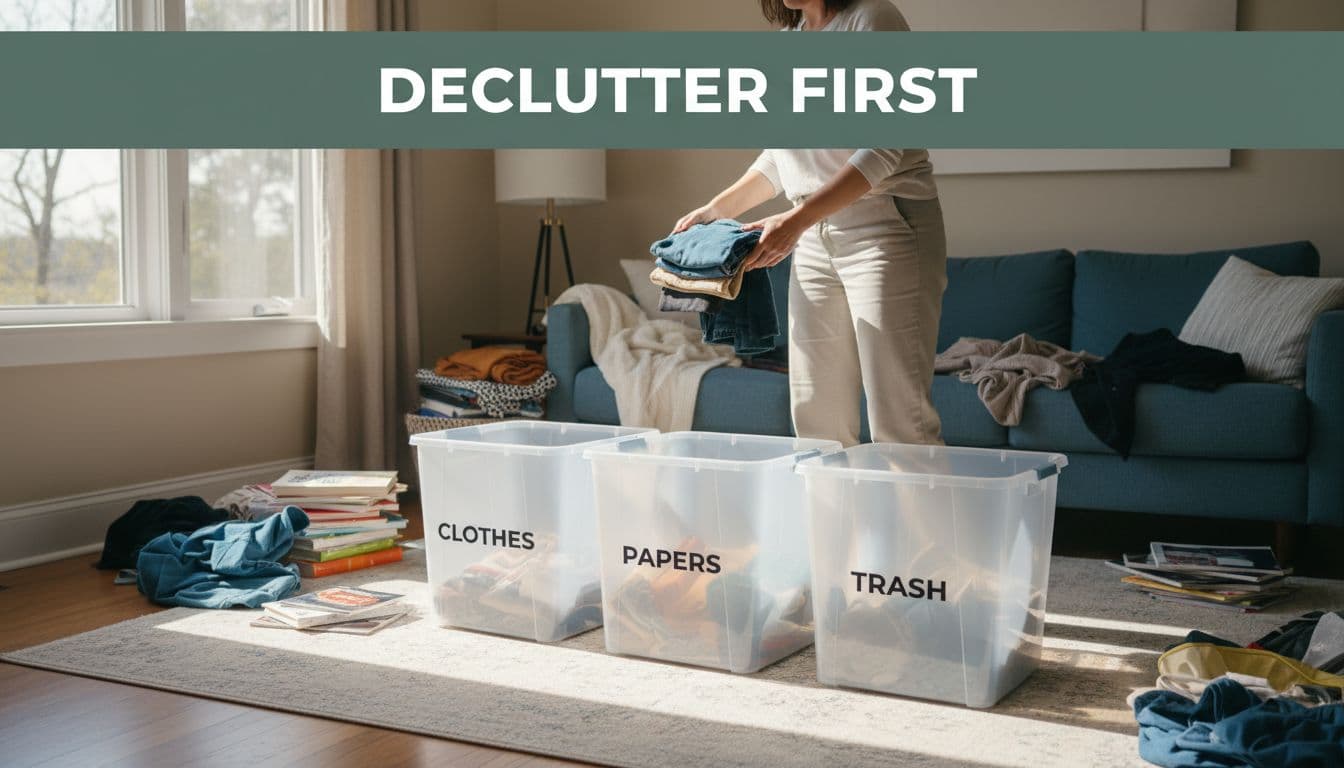
Before you wipe, sort. Trash, laundry, dishes, papers, and random items slow every task down because you keep working around them.
A basket system helps. Use one for things that belong elsewhere, one for trash, and one for laundry. Once the room is stripped down to what belongs there, surfaces open up and cleaning moves quickly. If you’re planning a seasonal reset, this guide on how often to deep clean a house can help you pace the bigger jobs.
Gather a basic cleaning caddy that covers most jobs
You don’t need a cabinet full of products. In most homes, a microfiber cloth, scrub brush, old toothbrush, spray bottle, bucket, vacuum with attachments, mop or steam cleaner, dish soap, white vinegar, and baking soda will handle almost everything.
Keep that caddy portable and simple. When your tools travel with you, you waste less time hunting for supplies like you’re on a scavenger hunt.
Use smart cleaning methods that save time and effort
The fastest deep clean follows a pattern. Work room by room, finish one space, then move on. Jumping between the kitchen, bathroom, and bedroom sounds productive, but it drains time because you keep switching tools and focus.
In 2026, steam cleaning remains a popular low-chemical option for floors, grout, and sticky buildup. It’s useful because hot steam loosens dirt without loading every job with harsh sprays.
Clean from top to bottom, then finish with the floor
Start with ceiling fans, shelves, vents, mirrors, and counters. After that, wipe lower surfaces like cabinet fronts, chair legs, and baseboards. Vacuum or mop last.
Clean first, floors last. Otherwise, you’ll clean the same dirt twice.
That order matters because dust always drops. If you vacuum first, you’ll undo your work the minute you wipe a shelf or fan blade.
Choose low-fuss cleaners that work on more than one surface
Hot soapy water handles a lot more than people think, especially in kitchens and bathrooms. For many hard surfaces, vinegar and water can help cut film and light buildup. Baking soda paste works well on grout, sinks, and stubborn spots that need gentle scrubbing.
If you want ready-made options, 2026 has more multi-use, low-tox choices than ever. This roundup of nontoxic cleaning products gives a good snapshot of what’s available now.
Deep clean each room in the order that makes the most sense
Start with the dirtiest rooms first, usually the kitchen and bathroom. They take more effort, so it’s smart to tackle them while your energy is high. After that, move to bedrooms and living spaces, then finish with entryways and floors.
Kitchen, focus on grease, food mess, and hidden crumbs
Begin with the fridge and pantry. Toss expired food, remove shelves or bins if needed, and wipe everything before restocking. Next, degrease the stove, backsplash, and oven door. Wipe cabinet fronts because grease lands there quietly and builds over time.
Don’t skip the sink, drain edge, and the space behind small appliances. Crumbs love hiding around toasters, coffee makers, and microwaves. If the oven is grimy, steam or baking soda paste can loosen the mess so you scrub less.

Bathroom, target soap scum, germs, and buildup
Spray the tub and shower first so cleaner has time to work. Meanwhile, soak the showerhead in vinegar, scrub grout, wipe mirrors, and disinfect handles, switches, and faucet bases.
Finish the toilet fully, including the base and the floor around it. Then rinse surfaces well so you don’t leave behind a dull film.
Bedrooms and living spaces, clear dust and soft surfaces
Wash bedding, pillow covers, and throws first. Dust fan blades, shelves, lamps, and window trim next. A pillowcase works well on ceiling fan blades because it traps dust instead of throwing it across the room.
Then vacuum under beds, sofas, and side tables. Lift couch cushions, check corners, and freshen mattresses or carpets with baking soda before vacuuming. For in-between upkeep, many people now use smart robovacs, and Mashable’s 2026 robot vacuum picks show how much better mapping and obstacle control have gotten.
Entryways, floors, and often missed spots that change the whole house
Shake out mats, wipe door handles, clean light switches, and run a cloth along baseboards. These spots get touched all the time, yet they’re easy to miss.
Finish every room with the floor. That last pass ties the whole house together and gives you the clean feeling people notice right away.
Avoid the mistakes that make deep cleaning take longer
Starting with the floor and other order mistakes
Cleaning floors too early is the biggest time-waster. So is skipping decluttering or bouncing from room to room because you got distracted. Finish one space before you move on.
A deep clean works best when it has a clear path. Think of it like painting a wall. If your strokes go in every direction, the job takes longer and looks worse.
Using too many products or ignoring small daily habits
Too many sprays can slow you down, and mixing products can create residue or bad smells. Keep your routine simple and repeatable.
Also, don’t ignore the tiny habits that protect your future weekend. Wipe counters, handle mail the day it comes in, make the bed, and keep floors clear. Those small moves make the next deep clean much shorter.
A fast deep clean isn’t about perfection. It’s about doing the right tasks in the right order.
Declutter first, carry a simple caddy, clean high to low, and work room by room. Start there, and your home will feel lighter without turning the whole day into a scrub marathon.