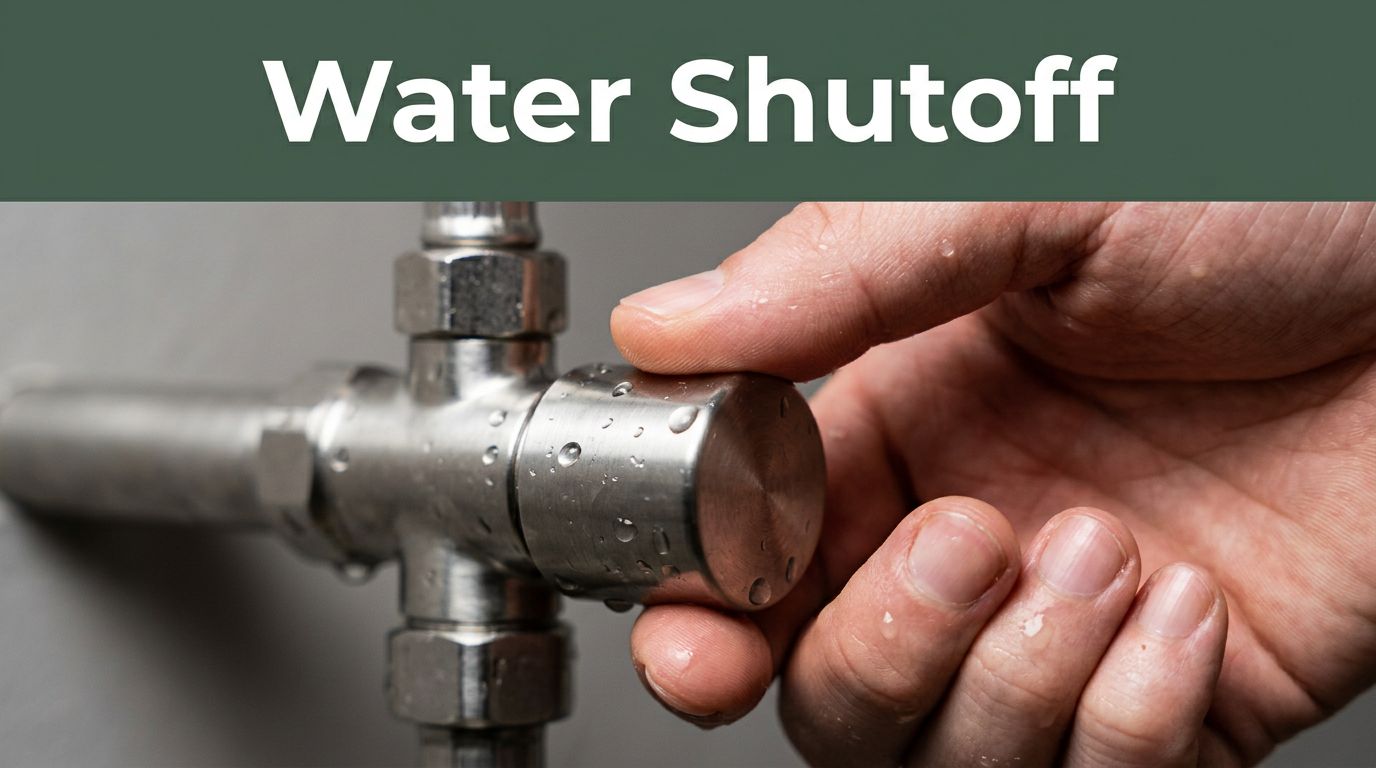
A burst pipe can turn a calm morning into a cleanup job in minutes. If water is rushing, pooling, or creeping toward outlets, quick action matters more than perfect plumbing knowledge.
Water damage is common enough that about 1 in 60 insured US homes files a claim each year from leaks or burst pipes, based on recent US reporting. The good news is that shutting off the right valve can stop a small problem from becoming a full-house mess. Start with the signs that tell you when it’s time to act.
Know when it is time to shut off the water
Not every drip calls for the main valve. Still, some problems need a fast shut-off because every extra second adds more damage. Common examples include a burst pipe, a frozen pipe that has split, a leaking water heater, a broken supply line under a sink, an overflowing toilet that won’t stop, a major appliance hose failure, sewer backup, storm evacuation, or a concern about water contamination.
If the leak is coming from one fixture, the local shut-off may be enough. If you can’t stop the flow fast, shut off the whole house.

For a simple side-by-side view, use this quick guide:
| Situation | Shut off here | Why |
|---|---|---|
| Leaking sink faucet or supply tube | Sink shut-off valves | Stops water to one fixture only |
| Toilet that keeps running or overflows | Toilet shut-off valve | Cuts water to the toilet fast |
| Washing machine hose leak | Appliance valve | Limits damage to one appliance |
| Water heater leak from supply line | Water heater cold-water valve, or main if needed | Stops incoming water to the tank |
| Burst pipe in wall or ceiling | Main house valve | The leak may feed from the full home supply |
| Water near electrical panel or several rooms flooding | Main house valve | Fastest way to reduce spread |
Small leak or full emergency, how to tell the difference
A small leak stays tied to one fixture or appliance. For example, water under a bathroom sink usually points to the sink supply line or trap. An overflowing toilet that stops when you turn the toilet valve is also a local problem.
A full emergency affects the house beyond one fixture. Think water coming through a ceiling, spraying from a split pipe, or flooding that doesn’t stop when you close a nearby valve. In that case, go straight to the main shut-off.
If you want a public utility example of what a home shut-off looks like, the San Francisco Public Utilities Commission’s home water shutoff valve guide shows the basics clearly.
Why acting in the first minute can limit damage
Water moves like spilled paint, except it can slip under floors, behind baseboards, and into cabinets. It also finds low spots fast. That means one bad leak can spread across several surfaces before you finish grabbing towels.
Recent US data shows roughly 14,000 water damage events happen daily, and average claims often run into five figures. Those numbers matter because the first move is often the cheapest one, stop the flow.
If water is spreading and you don’t know the source, shut off the main valve first and sort it out second.
Also, treat electricity with respect. If water is near outlets, cords, appliances, or the breaker panel, back away and call for help.
Find your main water shut-off valve before you need it
The hardest time to learn your home’s shut-off location is while water is spraying across the floor. A five-minute search today can save you hours later.
In many homes, the main shut-off sits where the water line enters the house from the street. Public utility pages from Seattle Public Utilities and the City of Milwaukee both stress the same point, use the house valve first when you can.
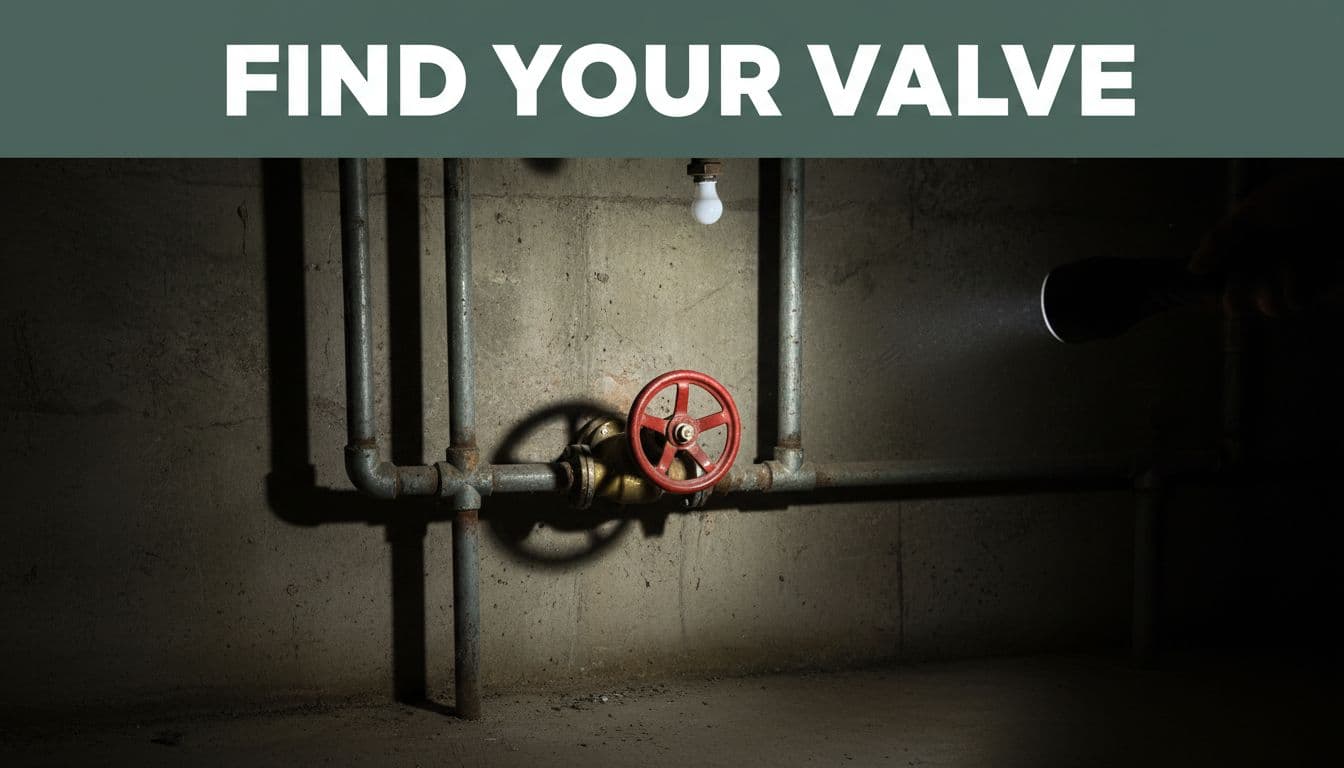
Common places to look in a house
In a single-family home with a basement, look along the front foundation wall, near the water meter, or where the main pipe enters. In slab homes, the valve is often in the garage, utility room, or near the water heater. In crawl-space homes, it may sit close to the crawl-space entry or in a nearby utility area.
Multi-story homes often place the main shut-off on the first floor, in a garage, or beside the water heater. Older homes can be trickier because past repairs may have moved, buried, or replaced parts of the plumbing.
Manufactured homes may have the shut-off under the home, near the skirting, or at a riser where the line comes up. Because those spots can be dark or cramped, keep a flashlight handy.
Label the valve once you find it. Then take a photo, keep a wrench nearby if one is needed, and show everyone in the home where it is.
What to do if you live in an apartment, condo, or older home
Apartments and condos don’t always have a clear indoor main valve for your unit. You may have small shut-offs under sinks and behind toilets, while the building’s main supply sits in a locked service room. In that case, contact building management right away.
Some older homes also rely on a meter or exterior service valve. The City of Columbus guide to locating a water meter and emergency service valve can help you understand what that setup may look like. If you still can’t find a usable shut-off, call your water provider or a plumber now, not during the next emergency.
How to turn off the water safely, step by step
Once you reach the valve, stay calm. Most house shut-offs use either a gate valve with a round wheel or a ball valve with a straight lever handle.
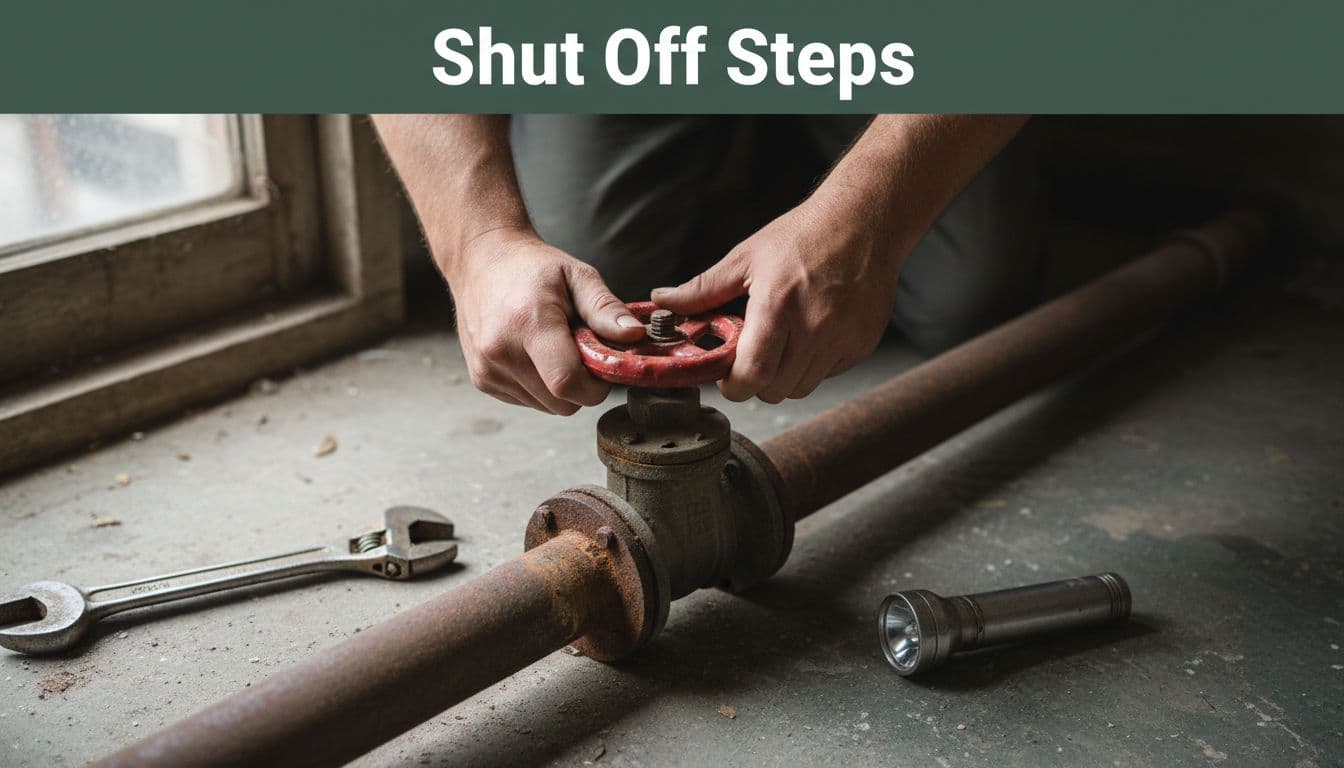
Follow these steps:
- Go to the house valve first. If you can stop water there, do that before trying the street meter.
- Check the valve type. A wheel-shaped valve is usually a gate valve. A straight handle is usually a ball valve.
- Turn it the right way. Gate valves turn clockwise until snug. Ball valves turn one-quarter turn, 90 degrees, until the handle sits across the pipe.
- Wait a few seconds. Water may keep flowing for 10 to 30 seconds while pressure drops.
- Don’t force anything. If the valve sticks hard, stop. A broken shut-off makes the problem worse.
How to shut off a gate valve without damaging it
Turn the wheel slowly and steadily clockwise. Use firm pressure, not brute force. When it feels snug, stop there.
Over-tightening can damage an older valve, especially in homes with aging plumbing. If the wheel won’t move, don’t wrench on it with all your strength. Call a plumber or your utility if needed.
How to shut off a ball valve in one quick turn
Ball valves are simple. Turn the handle a quarter turn until it sits perpendicular to the pipe. In plain terms, the handle should go from lining up with the pipe to crossing it.
Because ball valves move fast, they are often easier to use in a real emergency. That’s one reason many plumbers replace old gate valves with ball valves when possible.
If the house valve fails, when to use the street meter
Use the street meter only if the house valve is missing, broken, or not stopping the leak. Some meters can be shut off by the homeowner, but others require a special tool or utility access. Seattle’s utility guidance explains that some older meter setups should be handled by utility crews, not residents.
If you try the meter, use the correct tool and gentle pressure. Never force a frozen or stuck meter valve. If it won’t move, call the water company.
What to do right after the water is off
Shutting off the water stops the source, but there’s still water left in the lines. You’ll also want to limit damage before it spreads deeper into floors and walls.
How to drain the pipes and reduce more leaking
Open a faucet at the lowest level of the home, like a basement sink or first-floor tub. This helps drain leftover water from the plumbing and relieves pressure in the line. Then open another faucet upstairs if needed to help air move through the system.
Next, move rugs, boxes, electronics, and furniture away from wet areas. Mop or wet-vac standing water as soon as it’s safe. Then call a plumber and wait to turn the water back on until the problem is fixed.
When it is not safe to stay and handle cleanup yourself
Some water problems go beyond DIY. Leave the area and call professionals if you see standing water near electricity, major flooding, sewage backup, or water that may be contaminated.
If the water looks dirty, smells foul, or came up from a drain, don’t treat it like a normal leak.
That same rule applies after storms or suspected contamination. Shut off the supply if told to do so, then follow local utility guidance.
Simple ways to be ready before the next water emergency
Prepared homes recover faster because the hard part, finding the valve, is already done. Start with a small habit: test your shut-off every six months so it doesn’t freeze in place.
Also, replace old gate valves with ball valves when you can. Check washing machine hoses, look around the water heater, and insulate exposed pipes before cold snaps. For winter prep ideas, USA TODAY’s frozen pipe prevention tips offer simple reminders that fit most homes.

A quick home checklist that makes emergencies easier
A short prep routine can save money and stress later:
- Label the valve: Use a tag or sticker so anyone can spot it fast.
- Store tools nearby: Keep a flashlight and any needed wrench in the same place.
- Teach the household: Show family members or roommates how the valve works.
- Practice once: Do a quick shut-off drill so no one panics during a real leak.
The main goal is simple. Make the shut-off easy to find, easy to reach, and easy to use.
Water emergencies feel chaotic because they move fast. Still, the response is simple: know when to shut the water off, know where the valve is, and know what to do right after.
Take ten minutes today to find that valve, label it, and show one other person in your home. When water starts running where it shouldn’t, that small step can make all the difference.